Providing Sound Insulation with PU Foam
Sound insulation is becoming increasingly important for both comfortable living spaces and workplaces. Controlling external and internal noise in buildings improves quality of life and enhances performance along with energy savings. PU foam offers an effective sound insulation solution thanks to its gap-filling and expanding structure. In this article, we will examine in detail the methods, application areas, and advantages of achieving sound insulation with PU foam.
Sound Insulation Properties of PU Foam
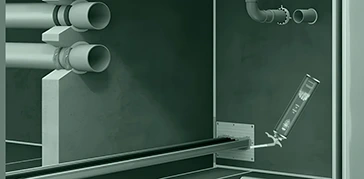
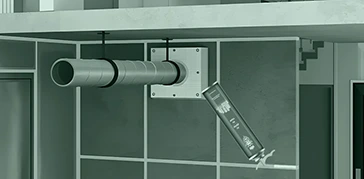
PU foam completely fills gaps in the areas where it is applied, minimizing air and sound transmission. Its cellular structure prevents the spread of sound waves and reduces reverberation. Therefore, it is preferred in apartments, offices, or industrial areas to create a quiet and comfortable environment.
Preventing Air Noise
Door and window edges, wall cracks, or floor joints are areas where airborne sound transmission is most intense. PU foam expands to fill these gaps and prevents the passage of airborne sound. This both increases indoor comfort and saves energy.
Reducing Structural Noise
Impact noises transmitted through building elements can be disruptive, especially between floors or in machine rooms. PU foam, thanks to its flexible and filling properties, reduces the transmission of such sounds. The hardened foam absorbs vibrations and limits sound propagation.
Application Areas
The main areas where sound insulation can be achieved with PU foam are as follows:
- Wall and Partition Panels: Prevent sound transmission through apartment or office walls.
- Ceiling and Floor Openings: Reduce impact and airborne noise between floors.
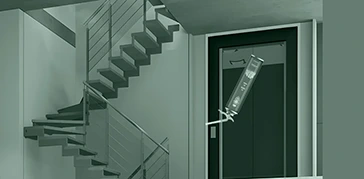
- Door and Window Edges: Prevent airborne external noise.
- Machinery and Industrial Applications: Provides vibration and noise control in industrial settings.
Application Techniques
There are certain techniques to consider when using PU foam for sound insulation:
- Surface Preparation: The surface to be applied must be clean, dry, and dust-free. This will improve the adhesion of the foam to the surface and enhance sound insulation.
- Layered Application: Applying the product in layers is more effective than applying it all at once to large areas.
- Controlled Spraying: To prevent foam overflow and ensure homogeneous filling of gaps, the spray amount must be controlled.
- Protective Equipment: Wearing gloves and goggles prevents skin and eye contact and increases safety.
Advantages
Using PU foam for sound insulation offers many advantages:
- Increased Comfort: Reducing noise levels increases comfort in living and working spaces.
- Energy Saving: Filling the voids reduces heat loss and promotes energy efficiency.
- Long Lifespan: The hardened PU foam retains its performance for many years.
- Easy Application: The spray nozzle or gun allows for effective use even in hard-to-reach areas.
Conclusion
PU foam is an effective, practical, and long-lasting solution for sound insulation. By filling gaps and blocking airborne and structural noise, it creates comfortable living and working spaces. Maximum efficiency is achieved when techniques such as surface preparation, layered application, and controlled spraying are used during application. Sound insulation with PU foam offers significant advantages in terms of both individual comfort and energy savings.
The information in this text may vary from time to time depending on the manufacturer. Always check the product label.