Tips for Applying PU Foam
PU foam is an effective material for filling gaps, sealing, and insulating in construction and repair projects. However, if not applied correctly, its performance can decrease and it may not yield the desired results. In this article, we will detail tips and tricks you can use to make PU foam application more efficient and safe.
1. Pay Attention to Surface Preparation
Ensuring the surface is clean, dry, and dust-free before application directly affects the adhesion and expansion of the foam. If there is dust, dirt, or moisture on the wall, ceiling, or frame surfaces, the foam will not adhere properly, and gaps will not be fully filled. Preparing the surface with light sandpaper or a brush will improve the quality of the application.
2. Use Protective Equipment
Protecting skin, eye, and respiratory health is important during PU foam application. Using gloves, goggles, and a mask prevents contact and ensures a safe working environment. In confined spaces, wearing a mask prevents inhalation of vapors, reducing health risks.
3. Implement a Layered Application
Applying the foam all at once to large gaps can cause it to overflow or fail to provide a homogeneous fill. Layered application involves waiting for each layer to harden before applying the next. This method prevents overflow and provides a more effective fill.
4. Use the Spray Nozzle Correctly.
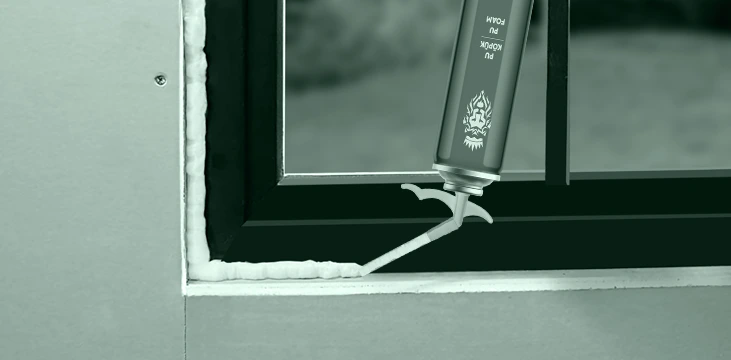
The spray nozzle should be positioned to reach deep into the gap. Nozzle angle and spray speed are crucial for even foam distribution. Overspray will cause overflow, while underspray will leave gaps. Controlled and patient spraying increases the success of the application.
5. Pay attention to environmental conditions.
PU foam application is affected by temperature and humidity. Very cold or very humid environments can negatively affect the expansion and hardening of the foam. Ensuring that the ambient conditions are suitable before application ensures an efficient application.
6. Post-Erection Procedures
After application, the hardened foam can be used to trim or sand away any excess. This ensures a smooth and aesthetically pleasing surface. Additionally, if paint or a coating is to be applied to the foam, the surface must be properly prepared.
7. Equipment Cleaning
Spray nozzles and application equipment should be cleaned after each use. If hardened foam remains in the equipment, there is a risk of clogging and incorrect application in the next use. Cleaning is essential for the efficiency of the application.
8. Pre-implementation Planning
Planning the application area in advance, accurately calculating the amount of material, and determining the spraying sequence prevents errors and increases the speed of the application. Planning is a critical step for both occupational safety and efficiency.
Conclusion
PU foam application, when done with the right techniques and tips, offers both fast and long-lasting solutions. Surface preparation, use of protective equipment, layered application, spraying technique, attention to environmental conditions, and equipment cleaning are fundamental steps to a successful application. With these tips, PU foam applications become safe, efficient, and effective.
The information in this text may vary from time to time depending on the manufacturer. Always check the product label.